AI in Digital Marketing: Transforming Strategy, Personalization, and Performance
Artificial Intelligence (AI) is no longer a futuristic concept in digital marketing—it’s a core driver of how brands understand audiences, create content, and optimize campaigns. From predictive analytics to automated customer interactions, AI is reshaping the entire marketing ecosystem with speed, precision, and scalability.
The Rise of AI in Marketing
Digital marketing has always relied on data, but the sheer volume of user behavior, preferences, and engagement signals today is beyond human capacity to process manually. AI bridges this gap by analyzing massive datasets in real time, uncovering patterns, and making intelligent decisions. This enables marketers to move from reactive strategies to proactive, data-driven approaches.
Personalization at Scale
One of AI’s biggest contributions is hyper-personalization. Instead of broad audience targeting, AI allows brands to tailor messages to individual users based on their behavior, interests, and past interactions. Recommendation engines, dynamic email content, and personalized ads are all powered by AI algorithms.
For example, AI can:
- Suggest products based on browsing history
- Customize website experiences for each visitor
- Deliver emails at the optimal time for engagement
This level of personalization improves customer satisfaction and significantly boosts conversion rates.
Content Creation and Optimization
AI tools are now capable of generating content, including blog posts, ad copy, product descriptions, and even video scripts. While human creativity remains essential, AI accelerates the content creation process and ensures consistency.
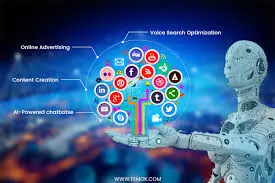
Beyond creation, AI also optimizes content by:
- Analyzing which headlines perform best
- Recommending keywords for SEO
- Predicting which formats will drive engagement
This leads to more effective campaigns with less guesswork.
Predictive Analytics and Decision-Making
AI doesn’t just analyze the past—it predicts the future. Predictive analytics uses historical data to forecast customer behavior, such as the likelihood of a purchase or churn.
Marketers can use these insights to:
- Allocate budgets more efficiently
- Identify high-value customers
- Adjust campaigns before performance drops
This shift from reactive to predictive marketing is one of AI’s most powerful advantages.
Chatbots and Customer Experience
AI-powered chatbots have transformed customer service by providing instant, 24/7 support. These bots can handle common queries, guide users through purchases, and even resolve complaints.
Benefits include:
- Faster response times
- Reduced operational costs
- Consistent customer interactions
As natural language processing improves, chatbots are becoming increasingly human-like and effective.
Ad Targeting and Automation
AI enhances digital advertising by automating targeting, bidding, and performance optimization. Platforms use AI to determine:
- Which audience segments to target
- What creatives to show
- When and where ads should appear
This ensures maximum return on investment (ROI) with minimal manual intervention.
Challenges and Ethical Considerations
Despite its advantages, AI in digital marketing comes with challenges:
- Data privacy concerns: Handling user data responsibly is critical
- Algorithm bias: AI systems can unintentionally reinforce biases
- Over-automation: Excessive reliance on AI may reduce human creativity and authenticity
Marketers must strike a balance between automation and human insight while adhering to ethical standards.
The Future of AI in Digital Marketing
AI will continue to evolve, integrating more deeply with technologies like voice search, augmented reality, and advanced analytics. Future trends may include:
- Fully automated marketing campaigns
- Emotion-aware AI for deeper personalization
- Real-time content generation based on user mood and context
Conclusion
AI is fundamentally transforming digital marketing by making it smarter, faster, and more personalized. Businesses that embrace AI can gain a significant competitive advantage, delivering better experiences while optimizing performance. However, success lies in using AI as a tool to enhance—not replace—human creativity and strategic thinking.